silhouette photo of man leaning on heart shaped tree

Resource: Life of the Beloved

This beautiful book — “Life of the Beloved: Spiritual Living in a Secular World” — began when a non-religious friend asked one of the late 20th century’s most renowned religious men to explain spiritual life.

Henri J.M. Nouwen responded with the manuscript for “Life of the Beloved.” Nouwen avoided spiritual “Christian-ese” and theology. He told his friend about how much God loved him and what knowledge of that love does to a person.

Nouwen’s friend still didn’t get it. At first, Nouwen thought he had failed. But the response among others who read the manuscript was overwhelming positive.

Considered one of the greatest spiritual writers of the 20th century, Nouwen was a Catholic religious who taught at Harvard, Yale and Notre Dame. He spent 10 years living and serving in a community of the developmentally disabled called L’Arche Daybreak in Toronto.

Just flipping through the book gives you gems of wisdom:

“The world is only evil when you are its slave.”

“The problem of modern living is that we are too busy to notice that we are being blessed.”

“The real question is not ‘What can we offer each other?’ but ‘What can we be for each other?’ “

“Life of the Beloved” is a masterwork, well worth your time.

praying man looking up

Resource: Life Without Lack

I’m taking an excellent course on Dallas Willard‘s “Life Without Lack,” taught by his associate Jan Johnson. This week I am meditating on this prayer that Willard wrote. I wanted to share it and to encourage you to read the book.

Christian mindfulness is all about filling our lives and minds with Jesus. We do this through intentional practices and through continually returning our thoughts to Him. We seek to keep His face ever before us.

It’s not easy. It is 99% grace and 1% intention. God fills us with joy and peace as we open ourselves up to Him. As Ruth Haley Barton puts it, we go from “in the world for God” to “in God for the world.”

Lord, minister to me by your Spirit. Come into my heart and mind, and release me from all inward tension and anxiety.

Hold before my mind the truth that I have nothing to fear from Satan, for you have defeated him; all I must do is fill my life and my mind with you.

Remind me often, especially in the midst of difficulty, that you, who are in me, are greater than he who is in the world.

Help me to carry this truth with me as I contemplate the awesome reality of the spiritual battle taking place, a battle that, perhaps in our time, is moving perceptively closer to its climax.

Give me the vision of you who are: our Father who art in heaven, the Shepherd in whose presence there is no lack, so I may have the confidence and power to love and to live as Jesus lived.

In his name, Amen.

Dallas Willard, “Life Without Lack”

For more information on the “Life With Lack” course, click here. I am just a student, not affiliated with the course in any way. For more information on Ruth Haley Barton’s books and other resources, click here.

Resource: Peace Is Every Step

Thich Nhat Hanh, a Vietnamese Buddhist monk and world-renowned mindfulness teacher, has a strong, but streamlined, message. While this makes many of his books somewhat repetitive, “Peace Is Every Step: The Path of Mindfulness in Everyday Life” is one of the best.

The book has 5 stars with 971 ratings on Amazon and 4.3 stars with 27,191 ratings on GoodReads. If you only read one book by Thich Nhat Hanh, this is it.

Thich Nhat Hanh divided this book into three sections:

  • Breathe! You Are Alive
  • Transformation and Healing
  • Peace Is Every Step

Packed with mindfulness exercises, the book contains several ideas that especially spoke to me. He writes about the Eucharist as a practice of awareness of the presence of Christ, which it truly is.

He calls often for us to look more deeply, especially at people who we find repulsive. We do not know what we could have become had we lived that other person’s life, Thich Nhat Hanh reminds us.

What we need to work on is transforming ourselves into a light. “When you have become fresh and pleasant, the other person will notice soon,” he writes.

“When you begin to see that your enemy is suffering, that is the beginning of insight. When you see in yourself the wish that the other person would stop suffering, that is the beginning of real love.”

Amen to that. For other reviews on Christian mindfulness resources, click here.

Resource: Live from Rest app

Live from Rest is a Bible-based Christian meditation app that’s free and easy to use.

You can create dozens of meditation sessions in a variety of categories: shorts, rest, gratitude, centering, family, mindfulness, 12 steps, freedom and songs. The app allows you to set the duration, the backing music or sounds, and the option to have focus bells.

Live from Rest has a choice of four voices to offer some of the meditations. Bible verses and themes are used in all the guided meditations. You can also use the app as a timer for silent meditation.

Lucinda Smith is the source, who provides her story and testimony on the Live from Rest website.

The Resources page contains a list of other apps, online resources and books to support your Christian mindfulness practice.

Resource: Hope Mindfulness and Prayer

Hope Mindfulness and Prayer app presents mindfulness and meditation in Christian form. As the narrator describes it in the opening video, “Meditation is the ship, and Jesus is the captain.”

This app … use the whole name as other apps are also shortened to Hope … has a five-star rating with 105 reviews in the Apple app store. It’s an especially good app for beginners in Christian mindfulness. The graphics are well done, and it’s easy to navigate.

The 12-day guide called the Foundation for the practices is free. Getting the other meditations costs you a subscription, which is $10 a month or $70 a year.

If you pay that, you get access to hundreds of meditations in these categories:

  • Life (anxiety, stress, purpose, self-esteem, loneliness, disappointment)
  • Rest (sleep and relaxation)
  • Carpe Diem (energy, creativity, balance, productivity)
  • Virtues (happiness, love, kindness, patience, forgiveness)
  • Health (depression, dieting, chronic illness)
  • Moments (being single, healing a broken heart, marriage, motherhood, fatherhood, divorce)
  • Difficulty (delays, fear of flying, test taking, public speaking, talking to a crush)
  • Sports and Recreation (training, motivation)
  • Mastery
  • Kids sleep stories

I couldn’t find much information on who created the app. It does gamify meditation with awards. Other apps for Christian mindfulness and meditation are listed on the Resources page here.

Christian Mindfulness Resource: Abide App

The Abide app was the first recommendation I received from a friend when she discovered my interest in both Christian mindfulness and the use of apps for insomnia. I now share her enthusiasm.

Abide, which costs about $40 a year for the premium version, has a wide array of Christian meditations, teachings and stories for all times of the day. It’s reportedly the #1 Christian mediation app.

The team creating Abide is Carpenters Code, a small group of former Google employees who decided to use their abilities to serve God. Their mission is to allow the world to experience the peace of Christ through Biblical meditation.

The daily guided meditations, found on the Home screen, come in lengths of 2, 5, 10 and 15 minutes, to suit our schedules.

The home or “Today” page also offer links to meditations for sleep, anxiety and emotions. A journal is on the page as well. Under the Sleep menu, Bible stories, meditations, psalms, material for children and other non-fiction meditations are available.

The Topics menus offers a variety of materials for dealing with emotions, growing spiritually, seeking guidance, healing, praying in the morning, offering thanks and more. The guides are short courses on topics including marriage, grief, money, parenting and more.

I’ve just gotten started with Abide, but so far, I highly recommend it.

Resource: Christian Mindfulness YouTube Channel

The Christian Mindfulness YouTube Channel is an active source for meditations and prayers. Updated regularly, Richard HH Johnston started the channel in 2009. Johnston speaks with a Scottish accent and operates the channel and its website, Christian Mindfulness, from the United Kingdom.

He is currently doing a Gospel Diamonds series in which he “looks at the beauty of the gospel from different angles.” The series, like much of the other material on the site, is deliberately simple in production value.

Johnston writes on the website that he created the materials based on more than 20 years of mindfulness, meditation and contemplative practice. He also provides online courses, certificates, workshops and retreats on Christian Mindfulness, contemplation and Cognitive Behavioral Therapy (CBT).

He noted that his materials integrate biblical theory, contemplative practices and the latest scientific studies in mindfulness, meditation and CBT.

Resource: Calming Christian

YouTube has a number of channels dedicated to Christian mindfulness. Calming Christian, from Dr. Dre Campbell, is aimed at providing God-centered tools to calm us down and help with symptoms of depression, anxiety and other challenges.

Dr. Dre has been uploading videos of guided prayer to the channel since 2016. His latest is a video specifically aimed at COVID-19 anxiety. It’s linked below.

Resource: The Big Book of Christian Mysticism

I bought “The Big Book of Christian Mysticism: The Essential Guide to Contemplative Spirituality” at the Abbey at Gethsemani bookstore during a silent retreat. Honestly, I was worried that it would bore me. The book is, as promised, big and the type is small. I was so wrong.

This is one of the best books I’ve ever read about Christian spirituality. The author, Carl McColman, provides the history, philosophy and practical aspects of the contemplative Christian tradition. The appendices has lists of other books to read and Christians to learn about.

This is very supportive guidebook to growing a practice in this glorious and fulfilling type of Christianity, whether you call it contemplative, mystical mindful Christianity. I highly recommend it, and I expect to read it regularly, much more than once.

Resource: “Sacred Rhythms”

One of the essential books for Christian mindfulness is Ruth Haley Barton‘s “Sacred Rhythms: Arranging Our Lives for Spiritual Transformation.” I’ve recently finished reading it for the third time as part of Lenten practice.

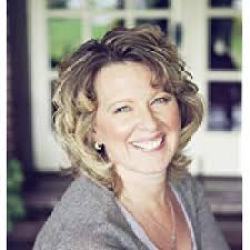
Ruth Haley Barton

Barton, who is a spiritual director and founder/CEO of the Transforming Center, walks chapter by chapter through the spiritual disciplines that help one lead an intentional life in the presence of Jesus.

She writes about solitude, Scripture, prayer, honoring the body, self-examination, discernment and Sabbath. Each chapter ends with ideas for how to move the content into your own life. Finally she instructs readers how to prepare a rule for life so we can live closer to God in any life season.

Barton also co-hosts an excellent podcast, “Strengthening the Soul of Your Leadership.” The current season is covering Lent. She’s a wonder! I hope you look her up.